




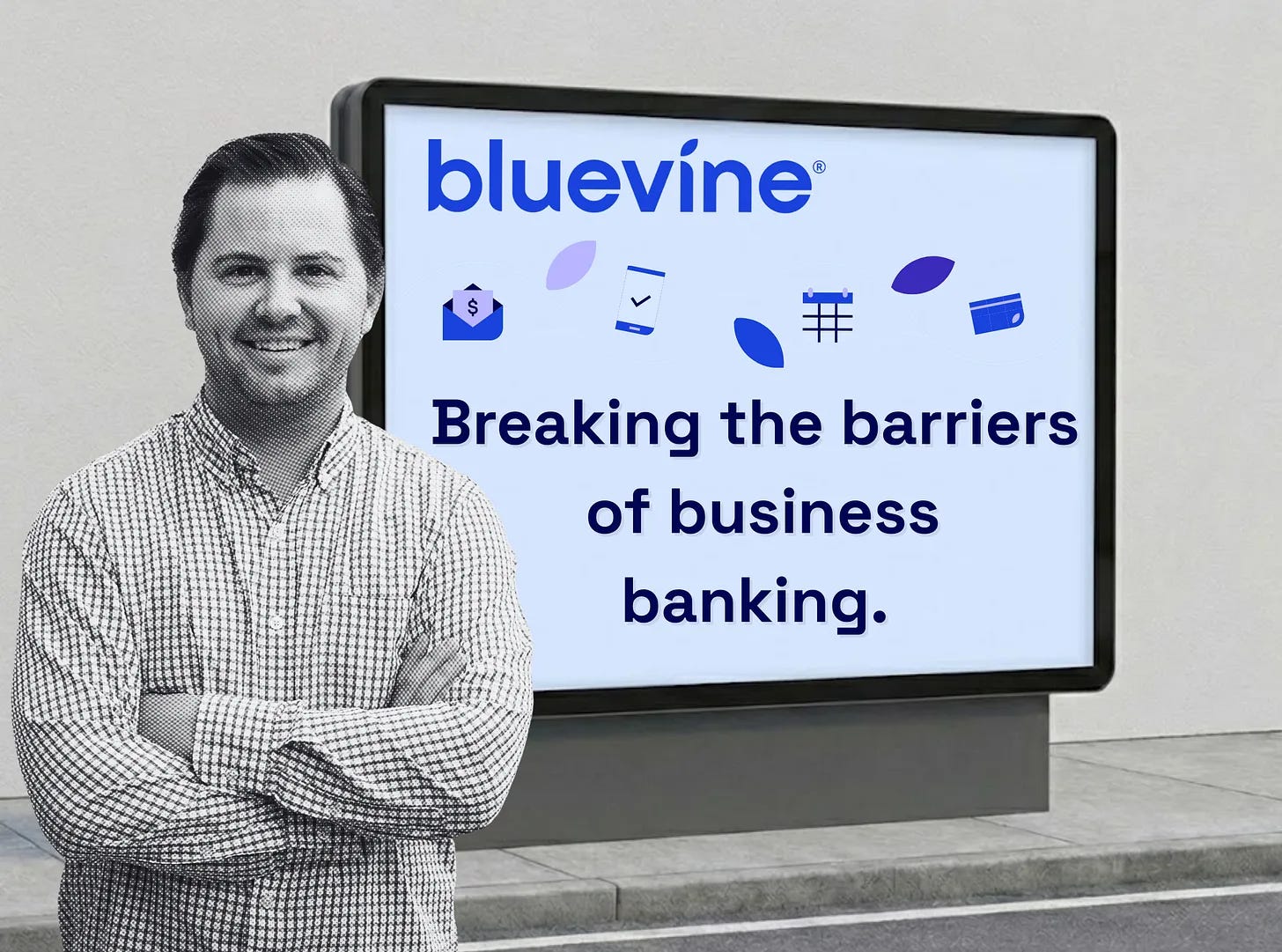
The Cost of a Click and the Value of a Brand
Casey Akerblom does not think about marketing as a debate between brand and performance. He thinks about it as a capital allocation problem.
Earlier in his career at Zillow, he watched a fully optimized performance engine operate at scale. Creative testing, incrementality experiments, channel structures, and cost controls were rigorously managed. Yet one metric dwarfed everything else: brand-driven demand.
That insight sharpened during COVID, when Zillow paused paid media for several months. “We paused all of our media spend,” he recalls. “Not only did things not fall back, we hit all-time highs and we gained market share.” Performance marketing did not disappear, but it was not the underlying engine of demand. Brand was.
For Casey, that experience reframed the role of marketing. “Instead of going to Google and the vending machine and paying a hundred-dollar crazy cost per click because they’re wielding their monopolistic power, if you can trade a hundred-dollar competitive auction click for a couple of pennies or a dollar per click on your own branded terms, that’s a trade-off you’re going to make 99 out of 100 times.”
Brand, in that sense, is not philosophical. It is financial. It lowers the long-term cost of acquisition and protects the business from auction volatility.
That framing now shapes how he leads marketing at Bluevine, the largest small business banking platform in the United States.
Meet Casey
A few years ago, Casey was in Kiawah for his father’s seventieth birthday. He played a round of golf with him, just the two of them, and they finished the day sitting on the porch with a cocktail and lunch, watching other groups come in. “That’s a pretty special one,” he says. Time with family, on a celebratory moment, without distraction. It is a revealing answer from someone whose professional philosophy is rooted in long-term value.
Investment Thinking Applied to Marketing
Before entering growth roles, Casey began his career in investment research at what he describes as an outsourced CIO firm. The team built endowment-style portfolios for high-net-worth families and institutions, allocating capital across hedge funds, venture capital, and private equity. The work was bottom-up and long-term by design.
Starting during the financial crisis sharpened that discipline. Every thesis had to be tested against real volatility.
Sitting across the table from fund managers, Casey listened to them describe businesses with durable competitive advantages and compelling growth stories. Eventually, he found himself asking a different question. Why am I on this side of the table listening to growth stories instead of helping build them?
He went to business school and joined Zillow in its early performance marketing days. Over nearly a decade, he helped scale the paid media organization from a small team to thirty-seven people spanning performance and brand channels. The throughline from investing remained intact: compounding matters more than short-term wins.
That philosophy looks different depending on the business model.
At Zillow, LTV was largely transactional. Consumers do not move homes frequently, and the monetization engine was marketplace-driven. “The LTV was really about optimizing the market,” Casey explains, noting that bringing incremental customers into an already healthy market did little to shift the overall economics.
Bluevine is structured differently. It is relational, not transactional.
Checking as Entry, Lending as Expansion
Bluevine offers business checking, lending, and payments within a connected platform built for small business owners. Many customers enter through checking because eligibility is broader and underwriting constraints are lower. “The primary source of growth for us right now is the checking business,” Casey says. “Most anyone can come to Bluevine and open a business checking account as long as they have a real business that they’re running.”
From there, the opportunity is to deepen the relationship.
Once customers begin using sub-accounts for employees, activating fraud controls, connecting their accountants through view-only dashboards, and leveraging payment tools, the platform becomes embedded in daily operations. Lending then becomes a natural extension for growth or short-term cash flow support.
Internally, the language might be cross-sell and up-sell. Casey frames it differently. “A lot of LTV and loyalty is the same. Loyalty is essentially LTV but expressed in behavioral terms. They’re actually using the products that you have that you’re offering.”
In that view, retention is not a campaign lever. It is a byproduct of product adoption and real value creation. The marketing function is responsible not just for acquisition, but for educating customers about the full scope of what the platform can do for them.
The Limits of Clean ROI
Casey holds a view that can be difficult to defend inside performance-driven organizations: the most impactful growth investments are often the hardest to measure through clean, direct ROI. Digital marketing has trained teams to expect tight attribution loops and immediate feedback, and that expectation can create a kind of institutional bias toward what is easiest to quantify. “That can make CFOs incredibly queasy,” he says. “They want to see everything with a clean, tight ROI.”
In his view, the issue is not measurement itself but overreliance on the most convenient form of it. Performance channels are seductive precisely because they are so measurable, but harvesting existing demand is not the same as building future demand. The work that compounds over time often operates one layer removed from last-click attribution.
Before asking what the ROI will be, Casey believes teams should start with a more fundamental question: what constraint are we actually trying to remove? “Is it that our customers don’t understand what we offer? Is it that they don’t know who we are? Is it that they may have heard we offer it but they haven’t cared so we haven’t yet emotionally resonated with them? Or is it that we’re just not showing up enough?” Until that problem is clearly defined, ROI becomes a premature proxy for strategy.
Once the constraint is identified, measurement can be designed around progress toward that outcome. It may not resemble the neat efficiency metrics of paid search, but it can still be rigorous. The real mistake, he argues, is confusing ease of measurement with strategic importance.
Category Creation and Emotional Imprint
Casey is particularly drawn to brands that reshape categories rather than compete narrowly within them. Airbnb stands out. A decade ago, the idea of staying in a stranger’s home felt uncomfortable. Today, it feels normal, even aspirational.
The shift was not achieved through rational feature comparisons. It was achieved through emotional reframing.
He contrasts that with brands that over-index on technical specifications in top-of-funnel advertising. He recalls seeing repeated ads for an ergonomic chair during MLB playoff broadcasts. The spend was clearly significant, yet the message focused heavily on specifications and comparison points. “The only reason I remember it is that I remember thinking to myself they must have paid such an exorbitant amount to have that much frequency and reach, and yet I still have no idea what the brand was.”
Rational persuasion has its place. But memory and preference are often built through emotional resonance. If a brand fails to create an imprint, frequency becomes expensive noise.
Direct Mail and Structural Advantage
In fintech and other regulated categories, digital targeting has tightened. Platforms have become more conservative about targeting options, particularly around sensitive financial attributes. When targeting entrepreneurship as an interest, Casey notes that the audience may range from a teenager imagining a future startup to a seasoned operator running a decade-old business.
Direct mail offers structural precision. It allows targeting based on time in business, credit profile, and operational maturity. “It’s quite an expensive channel to run,” he says, because cost is evaluated per mailer rather than per thousand impressions. But in higher-LTV segments such as lending, the precision can justify the cost.
Direct mail is not nostalgic. It is a tool deployed when structural economics favor accuracy over cheap reach.
Owning the Narrative Through Data
In a landscape flooded with AI-generated content, Casey believes brands must create their own news rather than compete on commoditized output. “There’s this land grab that’s going on right now where folks are leveraging AI to produce tons of content,” he says. “A lot of the glossary-style content is just regurgitating something that already exists.”
Bluevine’s BOSS Report and State of Small Business Report rely on proprietary data and customer insights. By analyzing internal trends, such as growth in new account creation by geography, the team can surface stories that matter locally. When Indianapolis shows strong growth, local journalists see a headline, not just a data point.
Brand mentions compound over time. They build credibility, improve visibility, and increasingly influence AI-driven discovery environments. Digital PR, in this context, is not vanity coverage. It is a strategic distribution of differentiated insight.
AI and the Preservation of Judgment
While many conversations about AI focus on role elimination, Casey focuses on skill evolution. “I think it’s the wrong focus,” he says. The more relevant question is which capabilities become more valuable.
At Bluevine, AI is used to streamline execution rather than replace strategic thinking. The team ingested SEO data, web traffic data, and performance metrics into custom GPT workflows and agentic solutions that generate reports and surface opportunities more quickly. This accelerates the middle steps of analysis.
What it does not do is decide where to win.
Humans still determine where product-market fit is strongest, how trade-offs should be assessed, and where creative differentiation can create advantage. “It’s about getting the middle steps faster and more streamlined so that then you can have deeper discussion around how to win, where to win, and how we apply creative solutions.”
The premium skill set, therefore, shifts toward first-principles thinking and constraint identification. Execution becomes more automated. Judgment becomes more valuable.
Marketing as Portfolio Construction
Across Zillow and Bluevine, across performance and brand, across direct mail and digital PR, the underlying philosophy remains consistent.
Marketing should behave like an investment portfolio.
Some efforts harvest demand. Others create it. Some reduce long-term acquisition cost. Others deepen lifetime value. The role of the CMO is not to win channel debates but to allocate capital in ways that compound advantage.
When a brand reduces your exposure to volatile auctions and lowers the effective cost of acquisition, it is not a soft metric. It is a strategic asset.
For Casey Akerblom, that is the job: to ensure that marketing decisions withstand both the CFO’s scrutiny and the market’s volatility, not by chasing clean attribution at all costs, but by building durable demand that makes the next click cheaper than the last.
More from Uncovered Media


