



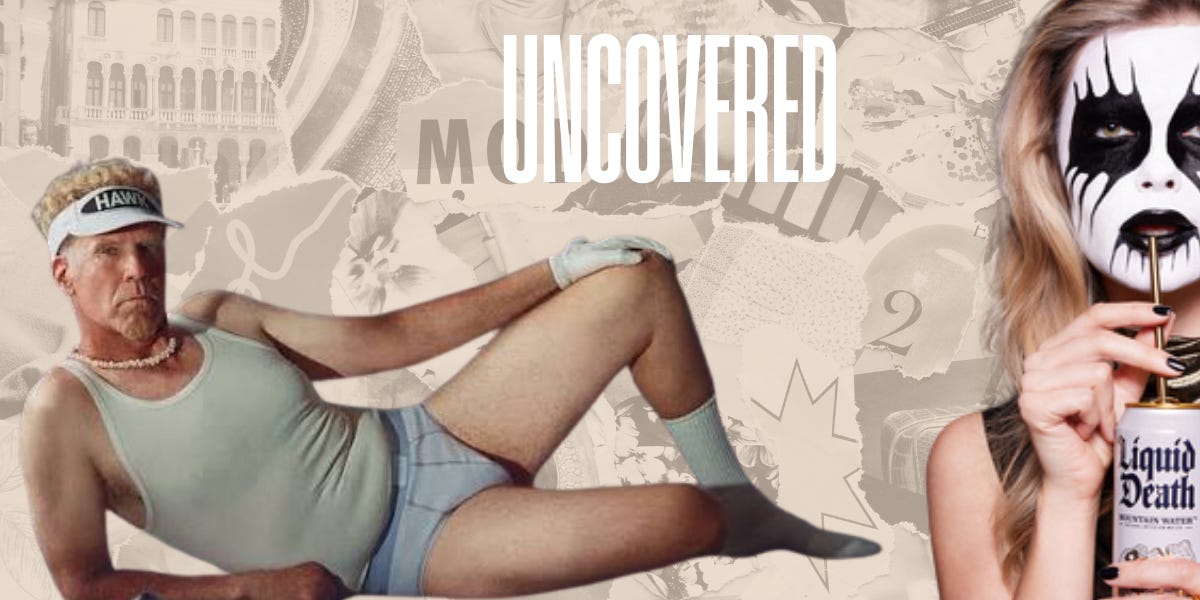

Brand collabs have become marketing’s favorite shortcut to attention. Combine two recognizable names, create scarcity and hope the internet responds.
The best collabs don’t create chemistry, they reveal it.
Which brings us to Will Ferrell in his underwear.
We’ve all seen this man half-dressed more times than we can count, whether it’s Talladega Nights after the fiery car crash or Old School when he goes full Frank the Tank. At this point, Will Ferrell in briefs is basically part of the American visual canon, so when SKIMS put him on a golf course in pale blue briefs, knee-high socks and a visor, the joke didn’t need explaining.
Ferrell was playing Lonnie “The Hawk” Hawkins, the aging pro golfer at the center of his Netflix comedy series, while Kim Kardashian delivered the line, “His body says retire. His SKIMS say one more round.”
It’s surprising for about three seconds, and then it feels as though someone should’ve brought us this years ago.
SKIMS didn’t have to invent some elaborate reason for Ferrell to be there. Audiences already associate him with a particular kind of half-naked absurdity, and the brand simply stepped into the joke. That’s what the strongest pairings tend to do. They don’t force two audiences together and hope a connection appears. They notice the connection first.
Two brands walk into a Target
On the surface, e.l.f. Cosmetics and Liquid Death touch very different markets and have no overlap. One sells makeup. The other makes canned water as if it were contraband from a metal festival.
But, in 2024, they launched Corpse Paint.
The $34 limited-edition makeup kit came packaged in a coffin and included black lipstick, white eyeshadow, dark eyeliner, setting spray and a makeup brush. Basically everything you’d need if KISS suddenly lost a band member.
It sold out in 45 minutes, and 68% of the buyers were new to e.l.f.
That 68% figure is powerful for the case study, but the coffin is why people cared. Neither brand behaves the way its category is supposed to. e.l.f. doesn’t treat beauty like a sacred ritual, and Liquid Death has spent years building an elaborate joke around the idea that drinking water should feel faintly dangerous. A coffin full of makeup was not a stretch for either of them.
They live in different Target aisles, but their customers would probably find each other at a party and talk for hours.
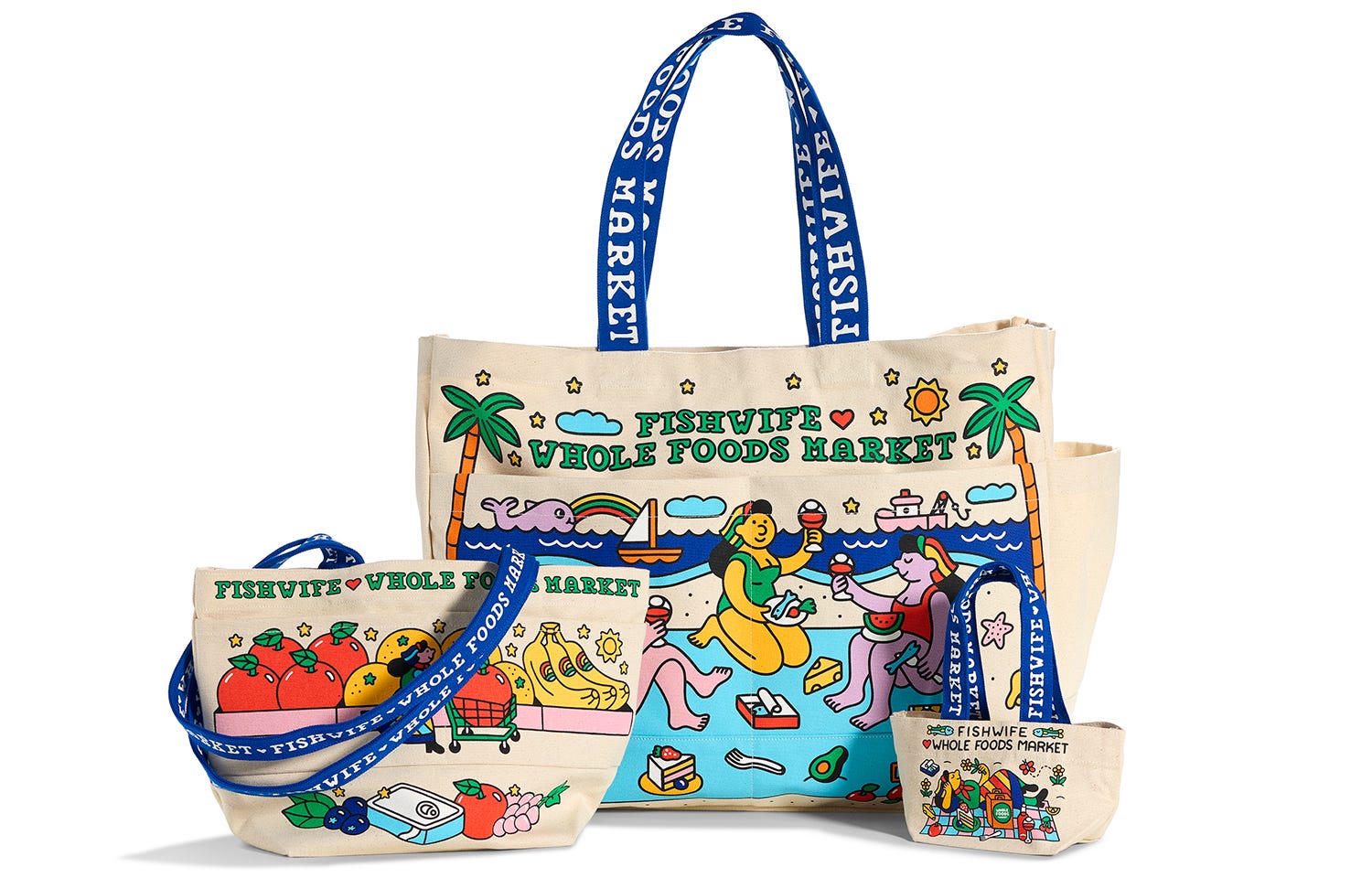
Whole Foods and Fishwife are playing a different version of the same game.
Their one-can sardine tote is opulent, and it’s also painfully accurate for a certain person. She has opinions about olive oil, probably owns linen napkins and has absolutely found a place for canned fish on her charcuterie board.
The tote works because it understands the buyer well enough to tease her. It’s less a piece of merchandise than a personality test with handles.
Demographics miss the fun stuff
Marketers can describe a customer with uncanny specificity.
Women, 25 to 34. Household income above $100,000. College educated. Urban. Married.
That’s useful when you’re buying media, but it tells you almost nothing about whether someone will buy a coffin-shaped makeup kit or send a friend a photo of a sardine tote with, “I need this.”
The useful information is often softer and messier. Taste, humor, references and the brands people choose all say something about how they see themselves.
On an audience spreadsheet, e.l.f. and Liquid Death look unrelated. Put the products next to each other and somehow nobody needs an explanation. The overlap has less to do with category than with worldview.
SKIMS and Will Ferrell share a joke. e.l.f. and Liquid Death share an appetite for absurdity. Whole Foods and Fishwife know exactly which person thinks one overpriced tin of fish deserves its own carrying case.
That’s considerably more useful than saying two brands have “audience overlap,” and it’s also why the current obsession with unexpected pairings can go sideways so quickly.
You can make almost anything look interesting for 24 hours. Put a luxury logo on Crocs. Turn a snack food into a sneaker. Package an ordinary object like a museum piece and call it limited edition.
You’ll get screenshots.
What’s harder is making the pairing mean something after launch day.
The best ones tend to produce two reactions in sequence. First, What? Then, almost immediately, Oh, of course.
You can manufacture the first reaction. The second depends on understanding what people actually think your brand is, which isn’t always the same thing your positioning deck says it is.
But cultural fit is only one way to find the right partner, and there’s another route that may be even more useful because it doesn’t depend on taste alone.
Look at what your customers are already doing.
Sometimes the partnership is already happening
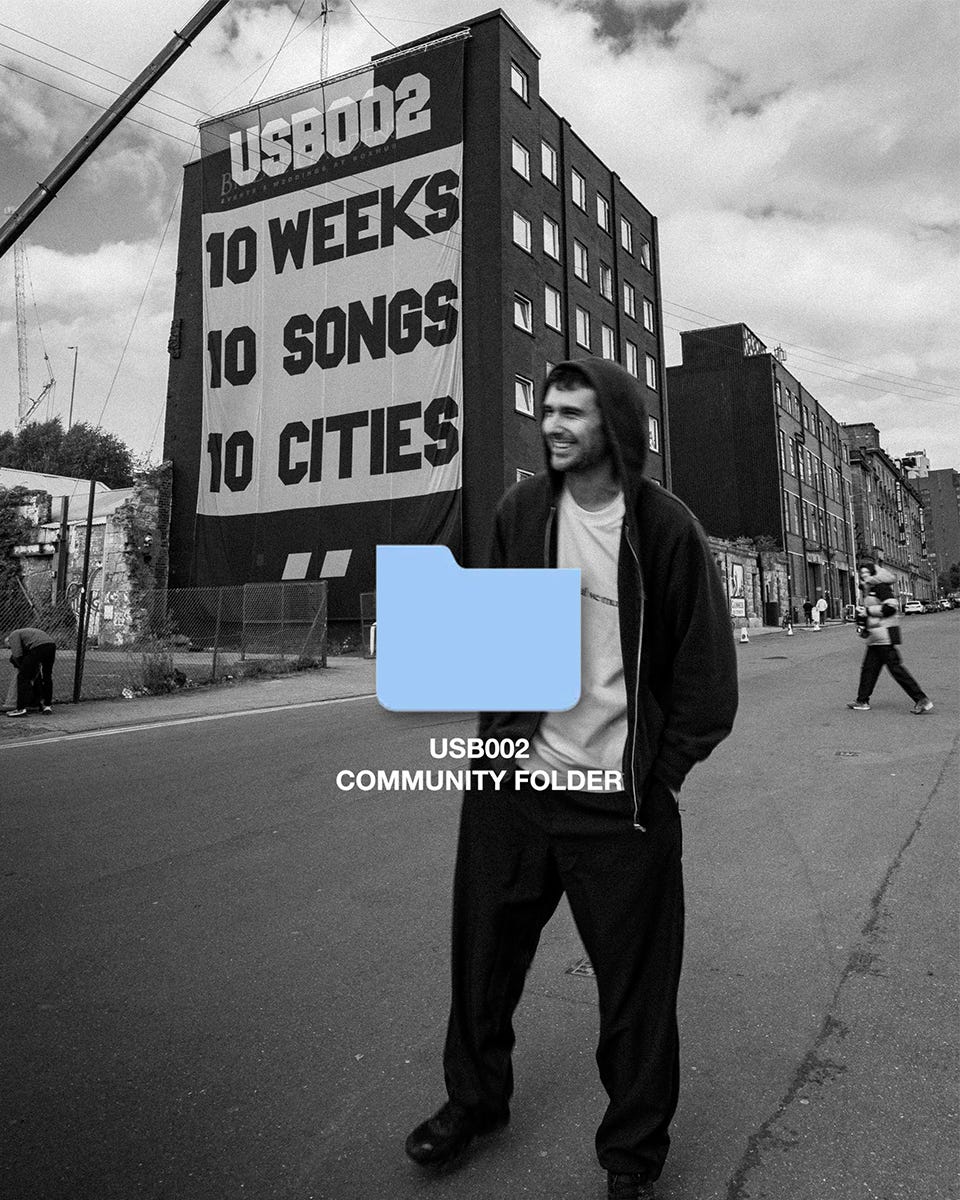
Dropbox didn’t have to invent its relationship with Fred again.. His team was already using the product.
During his USB002 tour, Fred asked fans to put away their phones and actually watch the concert instead of spending two hours collecting blurry footage they’d probably never look at again. His team captured the good photos and video, then put everything in a Dropbox folder for fans afterward.
You got the memories without becoming the unpaid videographer for row 105.
When we spoke with Liz Armistead, vice president of brand at Dropbox, she told us the company gets plenty of inbound interest from creators who already use the product.
It’s the kind of thing that sounds obvious only after somebody points it out. Marketing teams can spend weeks building dream lists of famous people while someone genuinely interesting is already using the product every day.
Fred again.. wasn’t valuable to Dropbox simply because he had an audience. His team had already found a way to make Dropbox part of the concert experience, so the campaign didn’t need to invent a use case or manufacture credibility. The behavior came first.
That changes where marketers should look.
Maybe there’s a creator using your product every night on tour. Maybe nurses have built a workaround nobody on the product team knew about. Maybe one customer segment opens the app three times more often than everyone else, or some unexpected industry keeps showing up in inbound sales.
Those patterns can tell you more about a potential partnership than another brainstorm about who happens to be culturally relevant right now.
A lot of partnership planning still begins with the same spreadsheet. Someone lists creators or brands, adds follower counts, audience demographics and engagement rates, and then the team debates who feels most “on brand.”
I’d start with a different list.
Who already pays you? Who uses the product obsessively? Who keeps mentioning you when there’s no contract attached? Which customer story gets passed around internally because even the company didn’t realize people were using the product that way?
Now you’re looking at behavior instead of aspiration, and when the relationship already exists, the campaign doesn’t have to spend half its time explaining itself.
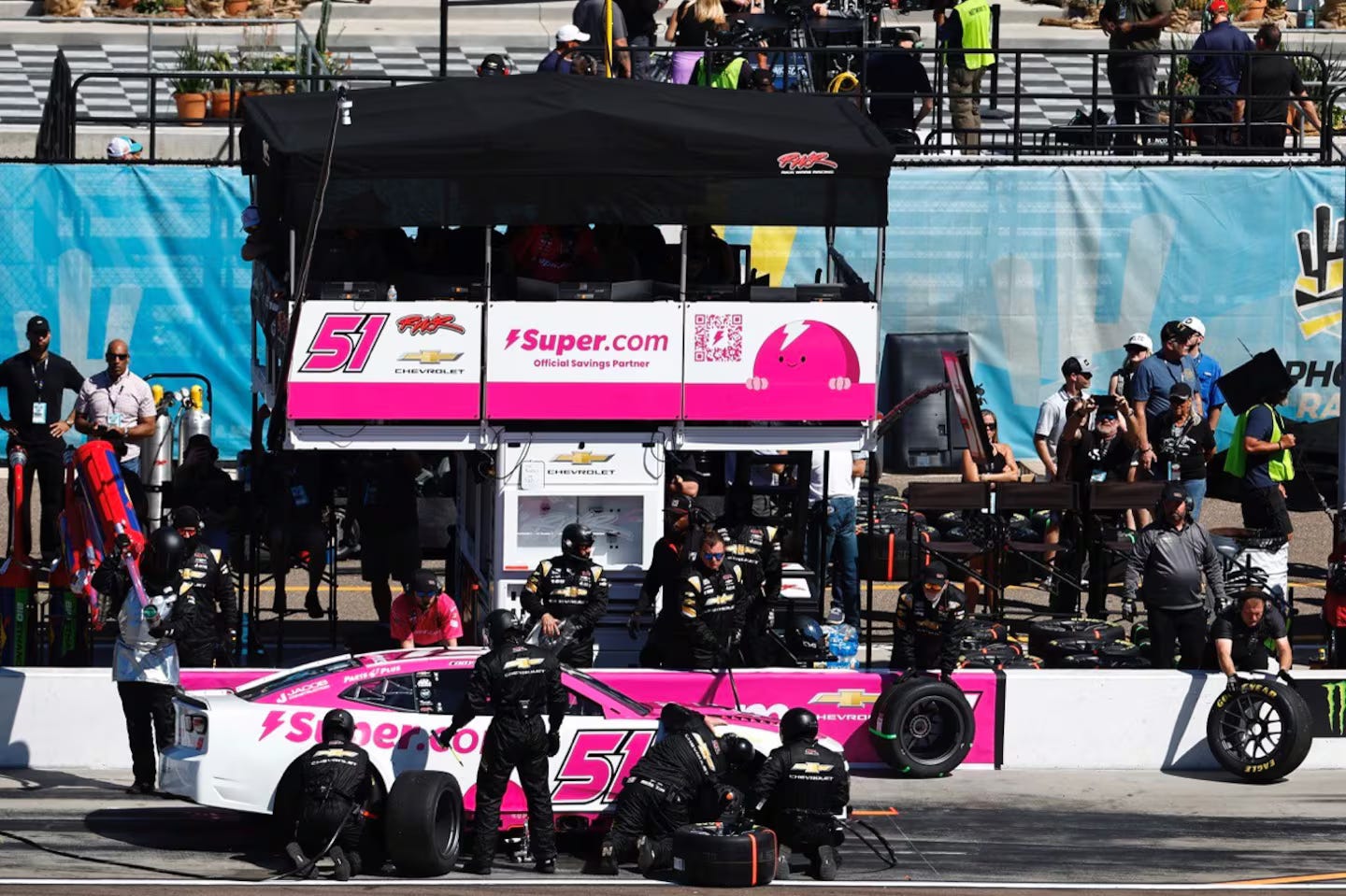
Super.com found NASCAR in its own data
Super.com got to NASCAR another way, through its customer data.
The company had grown largely through performance marketing, and when the team began spending more heavily on brand, it looked at where its customers were already spending their time.
NASCAR kept showing up.
Rick Galasieski, general manager of financial products and earnings at Super.com, told us instinct can get him interested in an opportunity, but the numbers still have to agree.
Then he went to Talladega.
Rick arrived at the Super.com tent expecting to do what marketers normally do at an event. He was ready to explain the company to strangers and convince them to care.
He barely got the chance.
People started walking up, pulling out their phones and showing him they were already Super.com members.
You spend months building audience segments and analyzing affinity data, and then the customer walks up in a NASCAR T-shirt and hands you the answer.
Super.com wasn’t inserting itself into NASCAR culture and hoping it fit. Its customers were already sitting in the stands.
That matters because the internal pitch for a brand partnership is usually predictable. They have people we want, we have people they want, and together we’ll reach more of both.
Sometimes that’s exactly the right reason to do it.
But Dropbox and Super.com point to another possibility. A partnership can be less about finding a new audience than showing your existing one that you understand who they are.
Super.com at NASCAR says, we know where you spend your weekends.
Dropbox with Fred again.. says, we know how this product fits into your creative life.
Neither one requires much explaining because the customer already understands the connection.
That’s a much stronger place to begin than choosing a famous person and working backward until somebody can make the PowerPoint logic sound convincing.
Look before you brainstorm
Before building another celebrity wish list, it may be worth spending a few hours somewhere less glamorous, including customer data, social mentions, support tickets and conversations with sales.
Who keeps showing up without being paid to? Where are your best customers spending their time when they’re not interacting with you? And which customers are using the product in ways nobody anticipated when the original use cases were written?
That’s how Dropbox found a relationship that was already happening, and it’s how Super.com learned that part of its audience was spending weekends at NASCAR races.
A marketer can convince themselves that almost any celebrity is “on brand” if the deck is good enough. Actual customer behavior is harder to talk yourself around.
So maybe the simplest test for a potential partnership is whether you can explain why it works without mentioning audience size.
If the answer is that the brands share the same joke, the same taste or the same customers, there’s probably something there. If the explanation begins with follower counts, impressions or “access to a new demographic,” you may just have a media buy wearing a collab costume.
The best partnerships rarely create the connection from scratch. More often, somebody was paying enough attention to notice that it was already there.
More from Uncovered Media


