



In this Episode
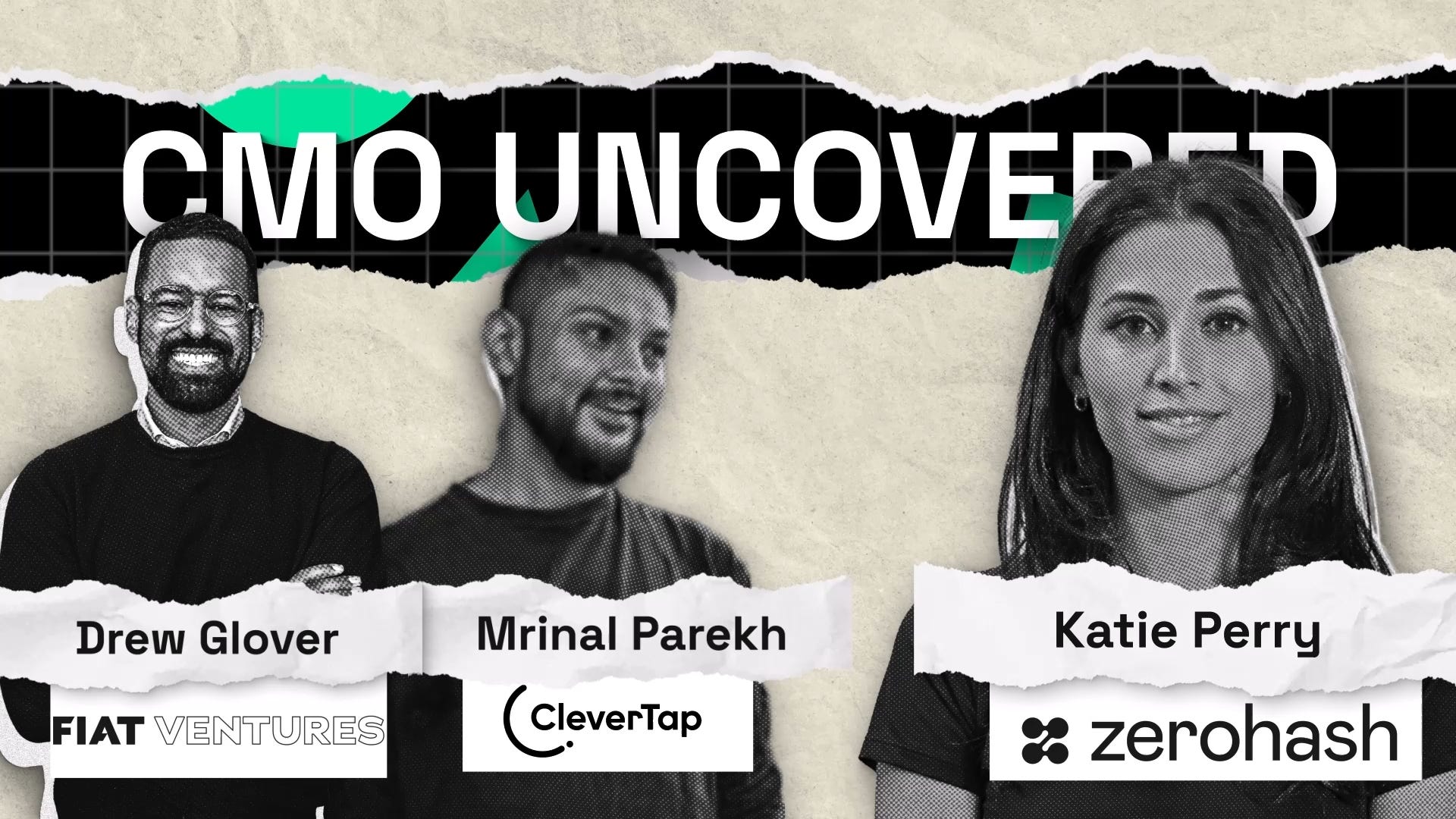
The transition from high-stakes marketing to the invisible architecture of global finance requires a specific type of intellectual recalibration. For Katie Perry, the shift from the retail investment frenzy of 2021 to the infrastructure layer of digital assets was not a retreat from the spotlight but a move toward the “plumbing” that makes the spotlight possible. During her tenure as the first marketing hire at public.com, she navigated the volatile intersection of social sentiment and market mechanics during the GameStop era. That period defined a generation of retail investors. Today, as the Chief Marketing Officer of zerohash, Katie focuses on the exacting task of building the infrastructure that allows banks, brokerages, and fintechs to embed digital assets into their own ecosystems.
The inception of this current phase followed a two-year period of fractional consulting. During that time, Katie operated a lean business, scaling high-margin clients by using agentic systems to bridge the gap between high-level brand strategy and the technical execution of complex ad campaigns. This period of independence allowed her to observe a recurring friction in the market. Companies wanted to offer digital asset functionality but were hindered by the technical and regulatory complexity of doing so. When she encountered zerohash, a company that had operated for eight years without a formal marketing organization while securing clients like Morgan Stanley and Franklin Templeton, she identified a rare instance of product-market fit that lacked only a narrative architecture.
The Uncovered Profile
Outside of infrastructure, Katie operates with a rhythm defined by high-intensity curiosity and a preference for the unscripted. Her mornings frequently begin at 6 a.m. in places like the Ginza district of Tokyo, where the cold air of a Japanese winter serves as a backdrop for endorphin-heavy runs. This discipline carries over into her intellectual habits; she is a self-described “sponge” who uses her evenings to build deep-dive dossiers on topics as disparate as 18th-century infectious diseases or British period dramas. She possesses a natural inclination for the “edge case” about to go mainstream, a trait that manifests in her professional choices and her personal fascination with subcultures.
Her ideal environment is one of functional contrast. While she maintains a professional studio in a Midtown Manhattan Regis office, half-office and half-production suite, she finds equal value in the raw, unpolished energy of a NASCAR race at Talladega. This duality reflects a marketer who values the logical and the strategic but remains deeply grounded in the human element. Whether she is listening to an AI-generated audio summary of medical history before bed or taking partners to the World Cup, Katie’s persona is anchored in a belief that while technology can automate the task, it can never replace the human instinct to explore, learn, and connect.
The Mechanics of the Build
zerohash operates as the infrastructure layer for digital assets; it provides the technology and licenses necessary for companies to offer crypto functionality without building the stack from scratch. Katie describes the company as the “plumbing” of the industry. This role is frequently invisible to the end user but essential for the operation. To explain this, she uses the analogy of YKK zippers. They are ubiquitous, they are essential, and they are only noticed when they fail to work. For zerohash, success is defined by high uptime, compliance, and seamless integration into the partner’s user experience.
The operational architecture of the business rests on three distinct product pillars. First, the company enables trading, allowing platforms like interactive brokers or E-Trade to offer digital assets to their users. Second, it facilitates transactions, specifically through stablecoins, which allow for instant cross-border payments and settlement. Third, it manages tokenization, an emerging field that financial institutions are increasingly exploring for asset management. Katie notes that the demand for these services is rising; stablecoin transaction volumes have increased by 170 percent year over year within their ecosystem, and requests for information regarding stablecoin payments have increased fivefold in the same period.
The Logic of the Pivot
The transition from B2C to B2B marketing involves a shift from wide-reaching data science to surgical, relationship-based strategy. At public.com, Katie managed a diverse user base ranging from day traders to first-time investors. The messaging had to appeal to a broad demographic without alienating specific segments. In the B2B environment of zerohash, the target audience is nearly 1,000 potential decision-makers. The marketing must be surgical; it requires an understanding of what will help an executive get promoted or solve a specific operational burden.
Katie argues that empathy is the commonality across both disciplines. Effective marketing requires identifying the specific anxieties that keep a customer awake. In B2B, this often means understanding the regulatory and compliance hurdles that a partner faces. zerohash holds licenses in 52 jurisdictions within the United States, a feat that took years of manual paperwork and trust-building. This regulatory moat is a core part of the product story. By assuming the technical and compliance liability, zerohash allows its partners to focus on their primary user experience.
AI in Marketing
The integration of artificial intelligence into the marketing workflow has changed the definition of an “entry-level” role. Katie acknowledges that the manual tasks she performed early in her career, such as reformatting award submissions, are now handled by LLMs. However, she maintains that these tools require an architect. The machine can identify patterns and themes within hours of research, but the human marketer must coach the system to know which “synapses” to fire.
At zerohash, Katie uses AI to pressure-test ideas. She frequently prompts systems to act as a “hater” or a skeptical lawyer to identify weaknesses in a campaign before it is launched. This “inversion” technique allows her team to address counter-arguments in minutes rather than through weeks of legal review. Despite this technological leverage, she is finding that she works more hours than before. The efficiency of the tools has not led to more leisure time but to a deeper exploration of possibilities. If a task that once took months now takes two weeks, the team can simply produce more thoughtful, high-fidelity work, such as the 60-page book on stablecoins they recently produced from end to end.
The Future of Finance
The long-term trend in finance is the convergence of traditional finance and decentralized finance. Katie observes that the narrative is shifting from “us versus them” to a collaborative model. Large institutions like BlackRock and WorldPay are not merely observing the space; they are actively investing in the infrastructure. This shift is supported by a growing coordination between builders and policymakers. Unlike previous eras of tech regulation where a gap in understanding hindered progress, the current fintech landscape involves a more sophisticated dialogue regarding how digital assets move and settle.
As the industry matures, Katie is leaning into offline, high-integrity human experiences. While the “agentic” world allows for infinite digital variations of a message, it cannot replace the trust built during a small dinner or a shared experience at an event like the World Cup. For zerohash, the goal is to remain the invisible, trusted backbone of these transactions. Success means that the partner remains the hero of the story while the “plumbing” functions without friction.
“The LLMs need to be organized, architected. There needs to be a system and a way of thinking that you apply to how you’re using them. I’m ideally trying to train these things to have very broad knowledge of our business and our partners’ problems, broader than I could ever have as a single human.”
More from Uncovered Media


