



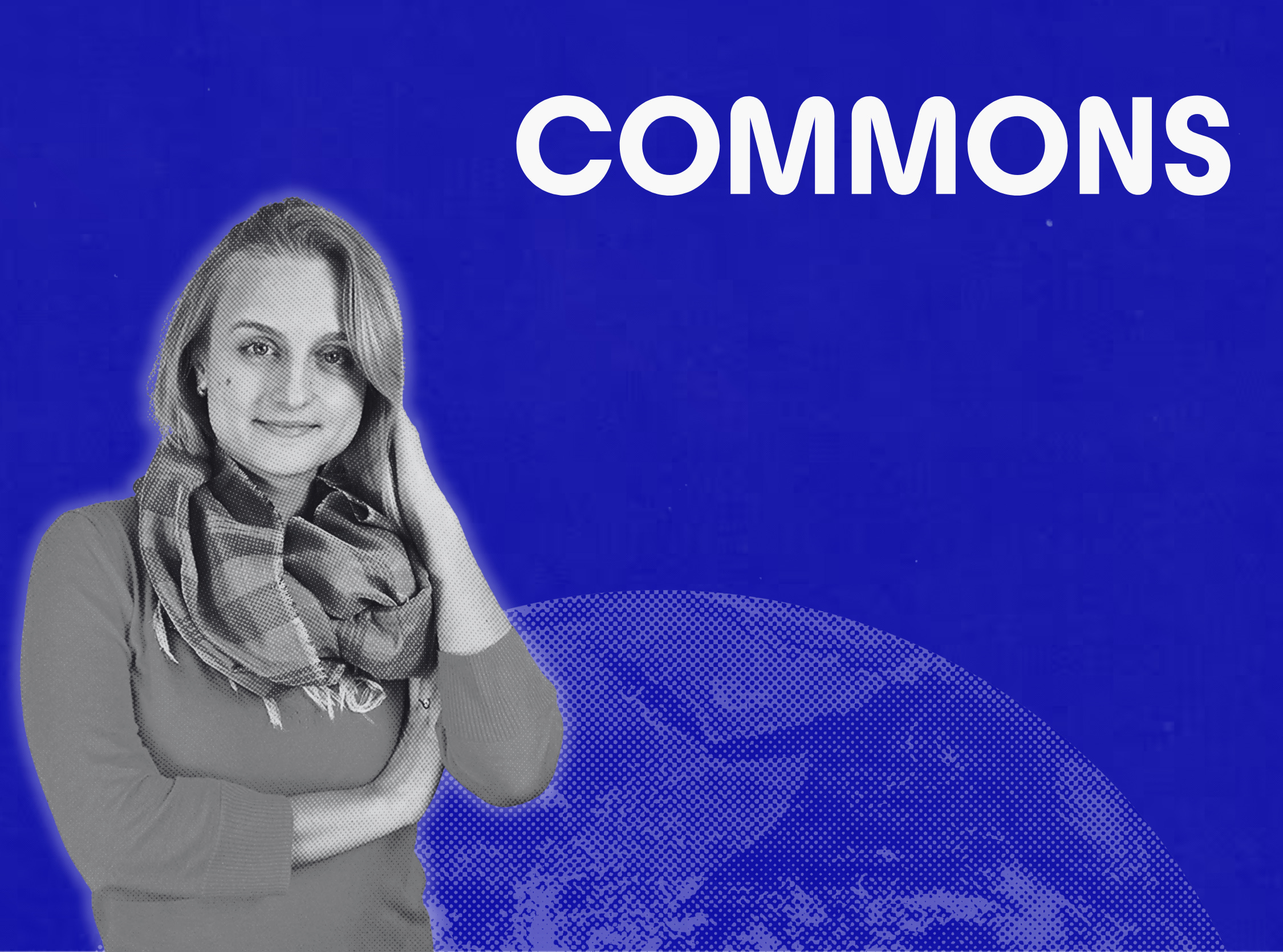
Liza Moiseeva does not view marketing as a game of capturing attention through the highest bidder. She views it as an exercise in mission alignment.
Throughout her career, which spans Moscow to the Bay Area, she has operated exclusively within the guardrails of mission-driven organizations. From microfinance networks to fair-trade subscription models, the throughline has remained constant: you cannot simply sell a product; you must sell a purpose.
At Commons, a fintech app designed to help users “buy less and buy better,” Liza faces a unique practitioner’s paradox. She is marketing a free tool that saves users money and reduces their carbon footprint, yet she must overcome one of the steepest friction points in digital finance: the trust required to connect a bank account.
To solve this, she made a high-stakes operational bet. She paused the majority of the company’s paid acquisition spend and pivoted the entire organization toward a content-led, educational engine. The result was not just a surge in followers, which grew from 6,000 to over 400,000 on Instagram, but a fundamental shift in how the brand establishes credibility before the first transaction ever occurs.
Meet Liza
Liza is a former competitive swimmer who has traded the chlorine of the pool for the open waters of the Pacific. “I spent so much time with chlorine, I do not want to be anywhere close to pools anymore,” she laughs. Her ultimate happy place is in Hawaii, specifically Maui, where the sound of whales and the warmth of the water provide a stark contrast to the structured, high-pressure environments of Moscow and D.C., where she began her journey. When she isn’t navigating the complexities of sustainable fintech, you can find her in her garden, a passion she shares with much of her team, grounding her mission-driven work in the literal earth.
Meet Commons
A Fintech App for the Planet
Commons operates at the intersection of personal finance and climate impact. The product is a mobile app that allows users to connect their bank cards and view not only how much they spend, but what that spending supports.
At its origin, Commons focused narrowly on carbon tracking. Users could measure the estimated emissions associated with their transactions and optionally offset them through curated climate projects. Over time, the company expanded its scope. Measuring carbon alone proved too abstract for mainstream adoption. Many consumers either mistrusted offsets or lacked context for what the numbers meant.
The evolution was pragmatic. When users connect their card through Plaid, Commons can analyze transaction categories and provide a broader picture of financial behavior. It now combines spending insights, sustainability brand ratings, and carbon offset options in one place.
The brand ratings are central. Commons evaluates companies based on publicly available sustainability disclosures and third-party certifications, then guides users toward higher-rated alternatives. The logic is straightforward: money is a signal. If millions of small transactions shift, supply chains eventually respond.
The app is free to download. Revenue currently comes primarily from voluntary carbon offset subscriptions and from a B2B climate services arm that works with high-net-worth individuals and companies. Consumer monetization is planned but secondary to growth.
The immediate goal is scale. Not passive downloads, but connected users who trust the platform enough to link financial data.
That trust requirement shapes everything.
The Pivot from Measurement to Money
When Commons first launched five years ago, the value proposition was rooted in carbon measurement. The idea was to help users understand their emissions based on their spending. However, Liza and the leadership team recognized a significant market reality: most consumers in 2026 still find carbon offsets and emissions data abstract or even untrustworthy.
The strategic shift was to move the focus from the “planet” to the “wallet.” By framing Commons as a tool to save money and spend better, the team lowered the barrier to entry. “Everybody cares about saving money,” Liza notes. “This is our way of bringing people into the fold.”
This transition required a total overhaul of the product’s communication. Instead of leading with a carbon survey, the app now leads with sustainable brand ratings, using publicly available data and third-party certifications to guide spending. This is a practical framework for utility: move from a complex, invisible problem (carbon) to a tangible, everyday decision (spending).
The Content-First Growth Framework
Liza’s most significant operational decision at Commons was the move away from paid-ad dependency. While many growth executives treat Meta and Google as the primary levers for scale, Liza viewed them as secondary tools for testing.
The “Content-First” framework she deployed is built on three specific pillars:
1. Platform-Native Entertainment
Liza rejects the “utility-first” approach to social media. “On social media, it’s all about entertainment,” she explains. “We aren’t going to be posting ‘Download the app, here’s our new feature.’ Nobody cares about that.” Instead, the team creates content optimized for virality and engagement, such as deep dives into the environmental impact of major corporations like Amazon or Target. By leading with entertainment that resonates with the audience’s values, the brand earns the right to eventually ask for the app download.
2. The 80/20 Channel Split
Knowing your audience is a prerequisite for resource allocation. At her previous startup, GlobeIn, Liza focused heavily on Facebook because her core demographic was women aged 35 to 80. At Commons, where the audience is significantly younger, Instagram is the primary theater of operations. She explicitly chose not to prioritize TikTok for conversion, noting that while the reach is high, the algorithm is a “closed loop” designed to keep users on the platform rather than driving them to an app store.
3. IRL Culmination
To solidify the online community, Commons hosts an annual Earth Summit during San Francisco Climate Week. This is not just a networking event; it is an “IRL culmination” of a year’s worth of content. It serves as a high-fidelity touchpoint that transitions digital followers into brand advocates.
Bridging the Fintech Trust Gap
The central challenge for any fintech app is the “card connection.” Commons uses Plaid, the same infrastructure that powers Venmo and PayPal, but Liza knows that technical security alone is not enough to win the customer. There is a “trust gap” that can only be bridged through consistent, educational marketing.
She views the marketing team’s role as performing “unscalable” work upfront to enable scalable growth later. By providing free value through brand ratings and the Second Nature podcast, the team builds goodwill. When a user is finally asked to link their financial data, they aren’t doing it for a stranger; they are doing it for a brand that has already spent months educating them.
The AI Magic Wand: A Sustainability Dilemma
As a CMO in the Bay Area, Liza is acutely aware of the pressure to automate. However, for a brand built on sustainability, AI presents a profound ethical conflict.
“We have to grapple with the fact that our most popular Instagram post ever was about the water usage of AI,” Liza admits. This awareness led to the creation of the Commons Responsible AI Statement, a public document outlining how the company measures and reports its AI usage.
Liza uses a powerful metaphor to describe the competitive necessity of AI: “It’s like being Harry Potter trying to fight Voldemort without a magic wand.” Because sustainable brands already operate under more constraints than their “regular” competitors, they cannot afford to ignore tools that increase efficiency.
Her framework for AI is one of Net Positive Impact. The team uses AI for research and data collection to scale their brand ratings faster, believing that the environmental benefit of a million people spending more sustainably outweighs the carbon footprint of the LLM used to generate that data. It is a calculated trade-off, one that requires constant measurement and public accountability.
Marketing as Capital Allocation
Liza treats marketing resources with the same discipline her mentors in microfinance treated capital. She acknowledges that paid ads have a place, but primarily as a laboratory. “Paid ads is the best way to test things quickly, test messages, and see what messaging angles help us get the highest quality user,” she says.
By using paid spend to validate hooks and then deploying those hooks into organic content, she creates a flywheel where the cost of acquisition (CAC) is subsidized by the viral reach of her community. This protects the company from the volatility of ad auctions while building a “stickier” user base that joins the app through belief, not just a banner ad.
Looking Ahead: The Stakeholder Shift
Liza points to Patagonia’s 2022 announcement, in which the company declared Earth its only stakeholder, as the gold standard for the industry. For Liza, the future of CMO leadership is not about managing a department; it’s about managing a brand’s legal and ethical status as a “public benefit.”
Her recommendation for future leaders is a rigorous critique of how wealth and power influence change, citing Anand Giridharadas’s Winners Take All as a foundational text. Her takeaway is a warning for the industry: “By corporations not making the right ethical choices as a business to begin with, they create the problems that they afterwards resolve through CSR.”
For Liza, the goal is to build a company where the marketing and the mission are indistinguishable. At Commons, she is proving that you don’t need a massive ad budget to scale if you have a community that trusts your data as much as they trust your “magic wand.”
More from Uncovered Media


